How to choose the right video format for your marketing strategy

Did you know that including a video on a landing page can increase conversion rates by 80%? In fact, a recent study by Sandvine reported that video accounts for 65% of all internet traffic to-date. For businesses, this means that there is a need to use visual storytelling to stay relevant and captivate existing and new audiences.

With various video formats available, choosing the right one for your marketing strategy is crucial. This comprehensive guide explores the key considerations and popular video formats to help you make informed decisions and elevate your content marketing game.

Choosing the right video format for your target audience

Before diving into the different forms of video, it’s important to be clear on what you want to achieve. The choice of video format depends on the goals and target audience of your marketing strategy. Are you aiming to increase brand awareness? Drive engagement? Or educate your audience? Each goal may benefit from a specific video format. For instance, brand awareness can thrive on visually stunning brand videos, while educational content can have higher success in how-to or explainer videos.

How does each video format affect user engagement?

We set out below the most popular video formats used in content marketing.

  1. Live events

Optimal for: Real-time engagement

Live videos provide an authentic and immediate connection with your audience. Whether it’s a live Q&A session, behind-the-scenes footage, or event coverage, live videos create a sense of urgency and excitement, fostering real-time engagement.

  1. Brand videos

Optimal for: Brand awareness

Brand videos are cinematic, emotionally charged narratives that aim to create a powerful connection between the audience and the brand. Typically running between 30 seconds to a few minutes, these videos showcase the essence of your brand, its values, and the unique story it has to tell. Think of them as the visual embodiment of your brand identity.

  1. Long-form / Explainer videos

Optimal for: Product or service explanation

When you need to simplify complex ideas or showcase how your product or service works, explainer videos are your go-to format. These concise, engaging videos break down concepts into easily digestible content, making them ideal for introducing new offerings or educating your audience.

  1. How-to videos

Optimal for: Educational content

How-to videos guide your audience through a step-by-step process, providing valuable insights and building trust. They’re particularly effective in industries where demonstrating the practical use of a product or sharing specific skills is key. These videos position your brand as an authority and resource in your field.

  1. Testimonials and case study videos

Optimal for: Building trust and credibility

Nothing speaks louder than satisfied customers. Testimonial and case study videos allow real people to share their positive experiences with your brand. These authentic narratives build trust and credibility, influencing potential customers by showcasing real-world success stories.

  1. 360-Degree videos

Optimal for: Immersive experiences

For a more immersive experience, especially in industries like travel, real estate, or events, 360-degree videos offer a unique perspective. Viewers can interact with the content by dragging or moving their device, providing a more engaging and memorable experience.

Factors to consider when selecting a video format

  1. Know your audience

Understanding your target audience is paramount. Different demographics may respond better to specific video formats. Analyse your audience’s preferences, behaviours, and the platforms they frequent to tailor your content accordingly. 

  1. Platform compatibility

Different video formats perform better on specific platforms. Consider where your audience is most active whether it’s YouTube, Instagram, or other channels – and optimise your video format accordingly for maximum reach and impact.

  1. Budget and resources

While grand brand videos can be visually stunning, they often require a significant budget. Consider your financial resources and the level of expertise available. Sometimes, a well-executed how-to video can be equally impactful without breaking the bank. Speak to our video experts at AD Media who have decades of industry experience. They will put your vision to life and work within your budget.

  1. Align with your brand message

Ensure that the chosen video format aligns seamlessly with your brand message. Consistency across all your content, including videos, is key to building a strong and recognisable brand identity.

  1. Optimise for search: Leverage keywords and descriptions

No content strategy is complete without optimising for search engines. Identify relevant keywords related to your industry, product, or service and incorporate them into your video titles, descriptions, and tags. From an SEO perspective, this ensures that your videos are discoverable by your target audience. One important factor to consider is the compatibility of the video format with search engine algorithms. Different video formats may be treated differently by search engines, affecting how well your content ranks in search results. For example, some video formats may be more easily indexed by search engines, allowing them to understand the content of the video and its relevance to specific search queries. This can improve the chances of your video appearing in search results and driving organic traffic to your website. 

Another consideration is the loading speed of the video. Search engines prioritise websites that provide a good user experience, and slow-loading videos can negatively impact your SEO. Choosing a video format that is optimised for streaming and has a smaller file size can help improve loading times and enhance the overall user experience.

  1. Measure success: Analyse your metrics

To refine your content marketing strategy, regularly analyse video metrics. Platforms such as YouTube (the second largest search engine with over 2 billion logged-in monthly users) and Vimeo offer insights into view counts, watch time, and audience demographics. Use this data to understand what works, iterate on your strategy, and continually refine your approach.

FAQs 

What are the different video formats available for content marketing?

There are several different video formats available for content marketing. 

  • One of the most common formats is MP4, which is widely supported by various devices and platforms. MP4 is a versatile format that offers good quality and compression, making it suitable for streaming and sharing on websites and social media platforms.
  • Another popular video format is Audio Video Interleave (AVI). AVI is a container format that can support various video and audio codecs. It provides good quality and compatibility, but the file sizes tend to be larger compared to other formats.
  • MOV (QuickTime Movie) is a video format commonly used by Apple devices and software. It offers high-quality video and audio, and it supports various codecs and features like transparency and multiple audio tracks.
  • WebM is an open-source video format developed by Google. It provides efficient compression and good quality, making it suitable for web-based content marketing. WebM is supported by most web browsers, including Chrome and Firefox.
  • FLV (flash video) is a format commonly used for online video streaming. It was popularised by Adobe Flash Player and offers good compression and compatibility. However, with the decline of Flash, the usage of FLV has decreased in recent years.

These are just a few examples of video formats available for content marketing. The choice of format depends on factors such as target audience, platform compatibility, and desired quality. It’s essential to consider these factors and choose the right format that aligns with your marketing strategy.

How to make your videos more accessible?

The choice of video format can affect the SEO of content. As a rule, video formats with captions or transcripts can improve accessibility and SEO.

We can help

By aligning your chosen format with your brand message and optimising for search, you can create a compelling video strategy that not only engages your audience but also drives tangible results.

To find out more about the type of video that best suits your business needs, reach out to one of our video experts at AD Media. We love working with our clients and delivering specific video content that serves their brand best. Get in touch on 0416 022 287 or email us at info@admedia.net.au


Video Marketing in 2023: The New Normal

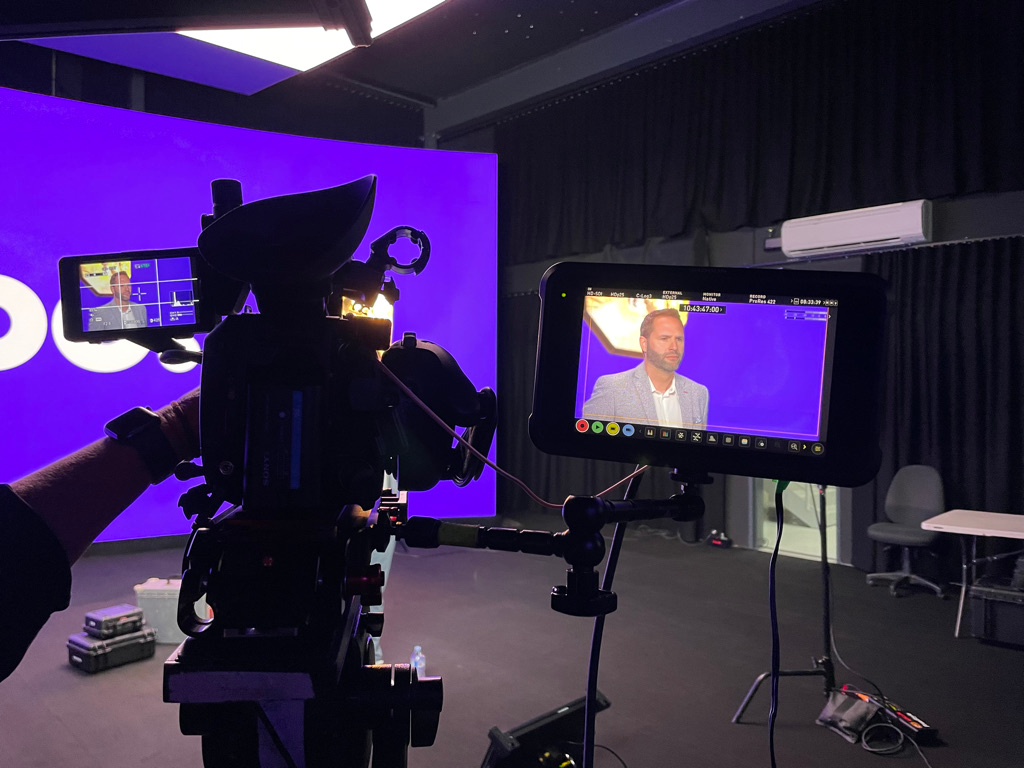
Videographers shooting a television commercial

On set for James Hardie TVC

Changing Consumer Behaviour and the New Normal

Video marketing has changed, as COVID-19 has brought about permanent changes in consumer behaviour. Consumers may go through the entirety of the sales process online without ever having a face-to-face experience. They may prefer to do everything from the convenience of their homes. Increasingly, our clients are finding that video content creates a connection with customers during these new changes. 

Building relationships with your customers is a key element to increasing the customer lifetime value; how much they spend over the frontend and back end of the sales cycle. For some financial services companies, this means ensuring that they start investing with you at the start, and that’s built on trust. How can you build trust with a new client, so that they choose to invest with you? The answer lies in a combination of touch points, one of which includes video content to ensure you get your message across in a simple, succinct and fast way. That’s why some of our clients in the FSI sector are using video for market updates, testimonials, ads and even livestreams. 

Go to the Platinum Asset Management case study to learn more about how we pivoted our events strategy to include live streams instead of face-to-face events during COVID-19. We continue to make financial commentary videos in 2023. We make 3-4 videos per month for Platinum Asset Management. 

Video Content and the Australian Consumer

As its name suggests, video marketing is an online marketing tool that is based on the use of audiovisual images, mainly through the Internet, to achieve different objectives of a company’s marketing strategy.

According to a report by Marigold, consumers in Australia and New Zealand are digitally connected at rates that often exceed their global counterparts. There has been an increase year-on-year in purchases from multiple online channels, as well as an increase in the use of mobile devices to view and share content. 

Australian consumers want to receive personalised content and offers from brands they trust and are happy to share their data for it (Marigold, 2023). Creating personalised video content is the best way to engage your consumers, whether it’s via email, YouTube, or social media advertising. You’ll get a better ROI when you use video to explain your products to your audience. It is also crucial to know where your consumers ‘hang out’. According to Allan Dib, founder of Successwise, being in the right channel for your audience is equally as important as the message itself. Video messaging, when placed in the right channel, is bound to bring traffic to your page.  

From a case study done by Marigold of 1054 ANZ customers, 62% have used their mobile phone in-store to research a potential purchase and 58% have made a purchase in-app. According to Hubspot, vertical form video is the way of the future for savvy marketers. 

Major social media platforms like TikTok, Instagram and YouTube have implemented vertical-form videos. These are highly engaging, and you stand to increase your ROI by 500% simply by using this format. Hubspot’s 2023 Trend Report also highlighted that these short videos under 60 seconds performed the best. Marketers also use different strategies to generate leads from their videos; the top strategy being adding links into video ad content on social media channels.

Loyalty programs can be a great way to keep in touch with your prospect list without being annoying. It is a way of rewarding your customers and building strong relationships with them based on incentives. To explain loyalty, video content can be used to quickly explain how your loyalty program works. These are just a few ways in which video can impact consumer behaviour if it is delivered through the right channels. 

Creating Effective Video Content that Sells 

Carrying out your video project effectively is ultimately worth its weight in gold. Short-form videos can be created to build brand awareness, send customers to a landing page, or even provide testimonials. These videos, if done right, can give consumers a feel of your brand, and ultimately build trust through a phone screen.  Let’s look at some stats. According to Hubspot: 

  • 41% of marketers say that overall ROI from video marketing is high, and 23% say that video has higher ROI than other types of content. 
  • Sharing your products through video can be an effective and easy way to increase your reach. 57% of marketers say that this format is easy to create. 86% of marketers say that video is great for teaching customers about your products.
  • 81% of companies that participated in the survey had a marketing budget dedicated solely to video. 


Social Media video content

Behind the scenes for Kraken Rum’s social media campaign.


Behind the scenes with Platinum Asset Management.


How to Create Great Marketing Videos

Realistically, the subject of how to create great, engaging marketing videos is an in-depth, intricate topic that could fill entire shelves of a library.

post production services studio.

Yahoo Pre-record live stream

However, as part of your digital marketing strategy, to create a video that converts, sells, entertains, and informs, whatever your objective may be, there are a few core pillars to remember in the production process.

Target Audience

When it comes to marketing videos, utilise one of the core principles of marketing.

Establish your target audience, research as much as you can, and tailor your video to them.

On social media platforms, there exists a range of fantastic tools you can use to target your videos to your audience, such as Meta Ads Manager.

Brand Message

Figure out what your company is trying to say, what your brand signifies, and what exactly you offer, and bring that to life with a branded video.

A marketing video is a wonderful method to get people aware of the who, what, and why of your brand, but brand videos also need to get your message across effectively.

Educate, inform and entertain.

Make sure everything down to your video editing is on the same page as the people you’re trying to reach with your brand videos.

Marketing Goals/Video Strategy

Camera in action.

As most great marketing videos need planning from pre- to post-production, so does your marketing video content strategy.

Figure out when you’re going to release it, distribution channels, how the sales funnel will look, the final product, etc. According to a survey of 500 marketing professionals done by Hubspot, pre-production takes the most time. This involves brainstorming, writing a script for your video and casting the actors. Once you have done all of this, it’s time to start shooting your video.  If you’re shooting a video series, it’s best to shoot everything at once and then cut the video down into sections using Premiere Pro or another editing program of your choice. iMovie is another alternative. 

Your video content strategy should be well planned out. If you are releasing video content on social media, using a scheduling tool like Meta Business Suite or Buffer can be convenient as the tool will automatically release content for you. These tools also offer analytics which is crucial to measuring your results and tweaking your strategy as you go along. Find what is most successful, rinse, and then repeat.

Plan, plan, and plan again.

Where Should You Focus Your Video Marketing Strategy?

When considering a good video marketing strategy, the first question you must ask yourself is usually: Which network or networks should I focus on when creating and promoting my videos?

There are a ton of platforms out there, but let’s dive into the most prominent video hosting platforms today.

YouTube

Vimeo and YouTube video channels

Since its creation in 2005, YouTube has without a shred of doubt become the video platform par excellence worldwide.

It possesses a whopping 2 billion active users per month (that’s a lot of potential eyeballs).

Its model is focused on the millennial and centennial generations since they are the ones who consume the most hours of video.

Individuals between 16 and 25 years old consume an average of 9.21h of online video per week (only 6.19h on TV) and those between 26 and 35 years old 8.68h (compared to 7.90h on TV).

The generational change is seen, the older the age, the less consumption of digital video and the more of television. So, we are inexorably heading towards this new audiovisual paradigm.

According to YouTube, more than 1.9 billion users log into the global video platform every month, and more than 1 billion hours of video are watched every day.

Perhaps the most notable stat (only one more I promise!) for marketers is that mobile devices play a crucial role since 70% of views come from mobile.

Facebook (Meta)

In recent times Facebook has received criticism (for several obvious reasons). However, in the social media landscape, it continues to be a presence that shouldn’t be ignored by any social media specialist.

On average, the site generates more than 8 billion daily views of video content, which is more than 100 million hours of video per day

Astonishingly, only 15% of the content is in video format.

Therefore, there remains a vast field of opportunity to take advantage of your potential audience, especially as around 60% per cent of users were quoted as saying they were on the platform to watch videos.

Video is shared on average 89.5 times more than any other type of format, making it the most viral type of content on the platform.

In addition, the native videos of the platform have 10 times more reach than the links to YouTube. So upload your videos on this network, instead of just sharing them from another channel.

Videos between 21 and 44 seconds are the most popular, so keep your marketing video short and sweet!

Instagram

Originally a platform for sharing photos, for the past decade Instagram has evolved into a major player in the social media landscape, now harnessing a combination of videos, photos, reels, and stories.

It launched its video feature in June 2013 and one of its main features is its brevity: videos were initially limited to 15 seconds, but can now be extended up to a minute.

You can upload videos to your profile feed, stories, reels, live stream, and also on Instagram TV.

In short, you have an enormous audience and a ton of different ways to deliver your marketing videos.

Tik Tok

There’s nothing really to be said about TikTok other than the obvious, They’ve completely changed the game.

live action creative footage.

Facilitating an international TVC campaign

Ever since its inception in late 2016, TikTok has emerged to change the face of social media video with its short, reel-style video format.

Whether you’re a video marketing agency or a business looking to reach new clients and build a brand, it’s hard to ignore the sheer opportunities that lie with getting the right audience on TikTok.

Advantages of Video Marketing

Now that you know where to put your videos, here are a few reasons why putting your videos in the right spots will supplement your marketing objectives greatly.

Engagement

Video strategy allows you to transmit a message in an original format. Videos that tend to work are those that use the great pillars of storytelling, in the sense they make the user feel something, whether they laugh or cry.

If you make people feel a certain way, then they’re much more likely to remember your message, and most importantly, your brand.

If you’re looking to get your message across in the most customisable way there is, the marketing video is hard to ignore. Create a video that you know will engage your target market with maximum impact, rinse, repeat, and watch your community grow.

It’s Easy (And Gets Around)


Video consumption tends to be easier to consume than reading text for many individuals, so audiences tend to associate it with leisure and are more receptive as a result.

Generally speaking, it’s easier to capture the attention of users with audiovisual content than with text content.

In addition, quality video content is more likely to be shared, compounding higher engagement and even becoming viral.

Purchase: Working on the brand’s video marketing increases conversion. It has been proven that videos help in the purchase decision since they allow a better conception of the appearance and operation of the product or service.

Authority

Having a consistent stream of high-quality promotional videos, corporate videos, brand videos, and testimonial videos (you get the picture) will cement your brand as an authority in your niche.

If you possess a prolific library of well-made, relevant videos, then it legitimises your entire business and people will see you as a serious competitor (which means more conversions)

Plus, marketing video production companies operating in the digital sphere will generally be much cheaper than paying for a tv commercial.

Video production can be quite expensive, so getting cost-effective, high-quality marketing video production should always be high on your list.

After all, who doesn’t like a bang for your buck?

Video marketing agency

On set for a livestream event.

Are video production services and corporate video production letting you down?

AD Media has decades of video production experience.  We work with our clients to deliver specific video content that serves your brand best. Contact us for more information on 0416 022 287 or email us at info@admedia.net.au 

Sources: 

Hubspot 2023 Market Trends Report

Marigold Report 

The One-Page Marketing Plan – Alan Dib (Book)

Essential Organic SEO tips to Make Google Love Your Site

Search Engine Optimisation (or Search Engine Optimization in the US) is a fundamental part of the digital space. As SEO stands, scores of articles and opinion pieces have been written about it.

There are those who say the death of SEO is imminent, others say that SEO is the future. One thing is undeniable. When done correctly for your website, SEO can have Google knocking at the door putting your business right on top of Google search.

This means more traffic, plus the benefits that come with having a high-quality website with a constant stream of visitors and engagement; don’t forget higher conversion rate and ROI (return on investment).

If you’re not entirely familiar with what SEO entails, put simply, SEO is defined as the process used to improve a website’s technical configuration, content relevance, and link popularity so its pages can become easily findable, higher quality, and popular towards user search queries.

As a consequence, search engines rank them better. Search engines are designed to provide users with the best, most relevant results for a specific keyword search.  By implementing some basic SEO strategies, you can help your site rank higher than your competitors.

Below is a list of pointers that can be applied to your own site.  

High-Quality Content


People creating a calendar

If there’s one thing that this information age tells us, people really love high-quality, consistent streams of content. And guess what? Google does too. The reality is, your competitors will most likely have some compelling content that resonates with their target audience.

Having a unique content strategy that’s relevant to your industry, audience and is consistent is key.

Funnily enough, articles like the one you’re reading right now are one of the most effective ways to really get those potential customers onto your site.

Other quality forms of content can include regular updates, news, videos, and photos.

For organic SEO, you can’t do much better than getting some fresh, originally produced content. It not only establishes you as an authority on the content you’re uploading, but you’ll also be much more attractive in the eyes of your audience.

If your site is looking a bit old and stale, it’s probably screaming for a bit of attention.

Put some high-quality articles on your website and watch them get found online before you know it.

Keyword Research


Hands searching on the web

In the world of search engine algorithms, keyword research remains a fundamental part of the SEO process.

Whether it’s SEO for a small business or a large corporation, specific keywords are a make-or-break factor for how attractive your website looks to the Google algorithm.

If you haven’t got the right high-ranking keywords, it’s more than likely search engines will ignore your site for other websites that do.

Spend some time conducting a keyword research exercise applicable to your business and find what your customers are looking for and apply that to your company website.

Determine the keywords and long tail keywords that represent your business, its service offerings, and your brand.

Building traffic to your site is a process that doesn’t happen overnight.  If done correctly, you will see improvements over a few months. The more relevant your keywords, the richer the copy, and the more searchable your site will become making your business more authoritative and this should reflect in the growth of organic traffic, lead generation, and prospects.

Having the right words on your website pages is never a bad investment in your company.

Backlinks


People holding connected copy space circle icons

Google ranks websites using an authority score. Authority Score is how search engines grade the overall quality of a website or a webpage. The higher the score, the more assumed weight a domain’s or webpage’s backlinks could have.  So, include in your organic SEO strategy,  a backlinks plan.  They are an incredibly good way to establish authority.

Think of it this way.

When you are thinking of tools to ensure your path to success in any area of life, it’s always much better to have people vouching for you and backing you up. It provides legitimacy and establishes your business as trustworthy.  SEO works in a similar way.

For example, if your company provides financial advice and the Economist and Financial Review link to your website’s content in their articles, they tell the world that what you have to say is worth looking at. Taking note of this, Google and other search engines when crawling your website will improve your rankings considerably.

If your website doesn’t utilise links from top-tier websites, look into ways to create some link-building.

Generally speaking, the more reputable the better.

There is something called toxic backlinks and Google can recognise these straight away.  Where possible, avoid companies offering miracle backlinks for your site as they might even diminish your standing in SERPs.

Aim for only quality backlinks, and watch search engine optimisation start working in your favor.

Competitor Analysis

Two people performing competitive analysis.

SEO specialists (or any marketing professional for that matter) will tell you that competitor analysis is a fundamental part of standing out above your competitors.

It seems obvious, but it is a fundamental part of SEO.

Let’s say you’re one of the small businesses in your neighborhood selling cookies.

For some reason, the other cookie business is killing it, seemingly able to generate leads and clients out of thin air, crush sales and draw enormous traffic through their website from their advertising and SEO.

Meanwhile, your business is lacking in clients, and you’re not able to get in the kitchen and bake delicious cookies anywhere near as much as you’d like.

What is going on?

Analysing your competitors is the perfect way to find out.

Find out exactly what that business is doing, adapt their organic SEO strategy to your business, and use other marketing tactics they’re utilising on their sites.

If they’re offering a free consultation for every client, consider doing the same.

Your competitor’s content, backlinks, and keywords are all something to consider when devising your organic SEO strategy. See what they’re up to, and mold their SEO success into your own business.

As Picasso once said, the best artists steal.

Mobile SEO


various hands using mobile.

Unless you’ve been living a nomadic lifestyle under a rock in the Mojave desert for the last 20 years, it’s a given that people are even more connected to their mobile devices.

If anything, an organic SEO marketing strategy needs optimisation for mobile like bread needs butter.

As data reveals, the number of individuals browsing for products and services on Google are on their phones, and if your site is devilishly hard to use on a mobile, chances are your site is getting the boot for a more worthy competitor.

It goes without saying, Google knows this as well.

For the survival of your business on the organic SEO stage, you’re going to want to create a page full of features and a process that runs like water for mobile.

So to ensure your ranking stays consistently high and rising, ensure your website is built to be mobile-friendly to stop interested leads browsing away on their touch screens.

On-Page SEO


two people building a website

Any SEO marketing agency worth its salt will tell you that on-page SEO is one of the first things a healthy, growing site needs to really achieve its potential.

When on-page SEO is done well, it can really help businesses rise above their competitors and seriously make an impact for themselves in a SERP ranking.

Here are some recommended tactics you can use to really beef up your site.

Title or Headers

H1, H2, H3 and H4. If you’ve read about SEO, you may have heard this before. These refer to the titles on your page in varying degrees of importance. Your H1 is your main title and should almost always have your target keyword in it.

The following headings such as H2 and H3 benefit from having titles that align with your target keyword. Remember to utilise that keyword research we spoke about earlier.


Meta Description

This is your chance to provide potential customers with a summary of what your business is about.

Think of a meta description as an elevator pitch on a search results page.

Generate curiosity, and attract attention so that the user wants to continue knowing about you. Keep your meta description about your brand products or services short and sweet so potential clients will be hanging for more.

Keep meta descriptions to 160 characters otherwise your ranking might suffer.

Alt Text

Alt text is a handy bit of metadata tool you can easily do yourself.

Alt text is text added on the back end to an image detailing what it is.

It’s your chance that both boosts the structure of your website and adds some excellent keywords to your beautiful images.

Organic SEO Studio


Don’t settle for a lackluster organic SEO marketing strategy.

At AD Media, we customise every marketing campaign to make sure you achieve your goals, whatever they may be.


Give us a call on 0416 022 287 today. You’re in the right hands.


What is a Hybrid Event?